


Happy Tuesday. This week, we’re sharing:
How a husband-and-wife team bet $60k on an Italian snack cracker and sold out in a month
What 12 CPG experts would fix first at a $1–5M CPG brand
150M Americans feel dehydrated, party on aisle 4, the next CPG brand is being built in a dorm room

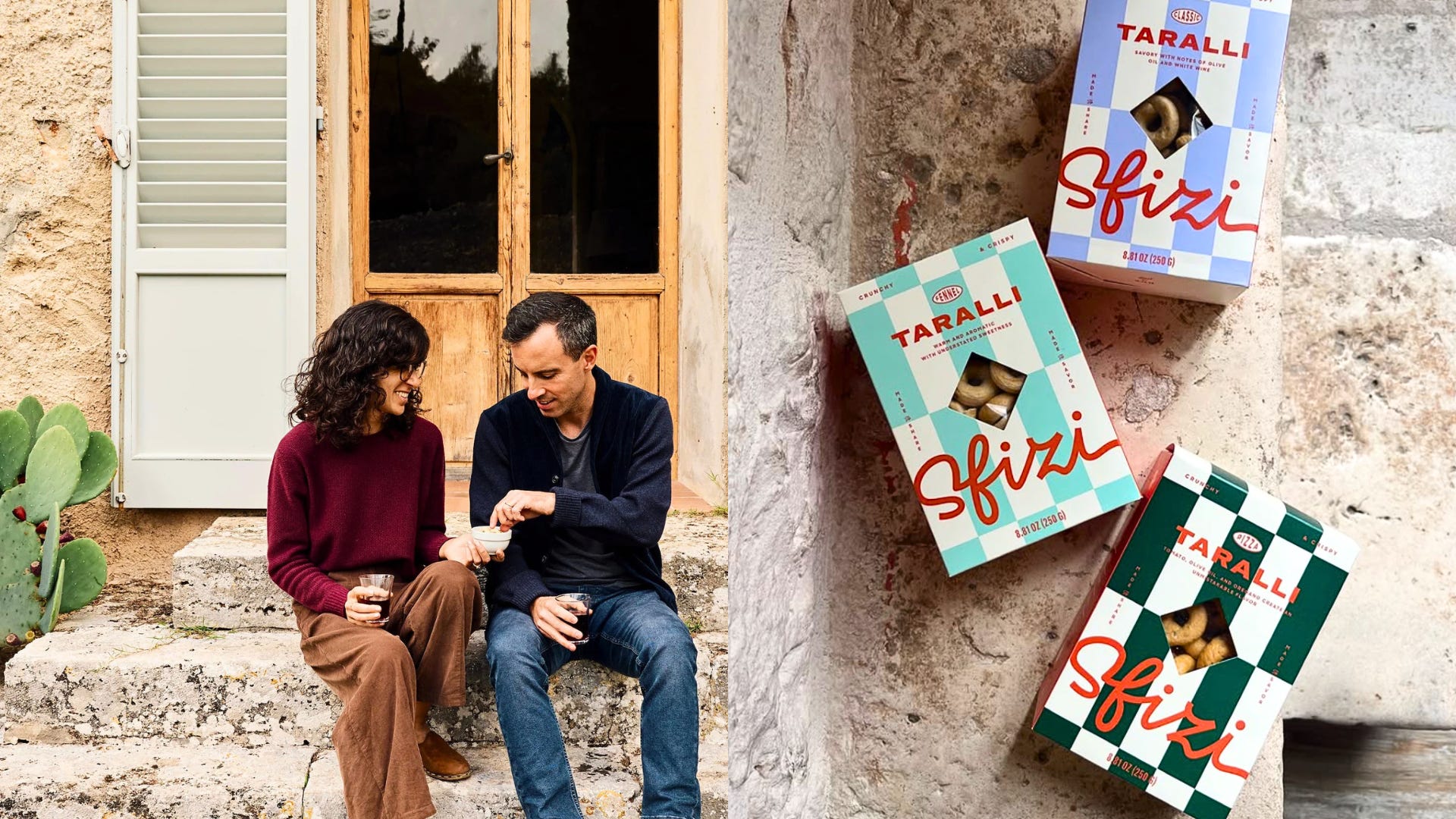
Meet Sheela Prakash and Joe Fiorenzo, the husband-and-wife team behind Sfizi. The brand is built on a simple idea: find the best food in Italy and bring it to the U.S.
She’s a cookbook author, he’s a former finance guy, and together they set out to import the kind of Italian products you only discover if you’ve spent real time there.
They started with taralli, the small, crunchy crackers served at aperitivo across Southern Italy. “We had never found one as good in the U.S., so we went to find it,” says Sheela. “That melt-in-your-mouth, light, flaky, almost like really good pie crust.”
The interesting part is how they did it.
No customer surveys. No market research. They opened Google Maps, searched “tarallificio” (Italian for taralli factory) and started cold-emailing producers.
After visiting six producers across Puglia, they found two brothers reviving their family’s culinary heritage, and making the best taralli they’d ever tasted. They got FDA approval in 24 hours and shipped their first run across the Atlantic.
They sold out in a month.
00:26 - The minds behind Sfizi
03:00 - Blindly emailed a dozen producers
06:30 - Sold out in a month
09:22 - There’s a lot of ocean in between
11:35 - Count the ingredients on one hand
15:23 - Nobody knows, just ask
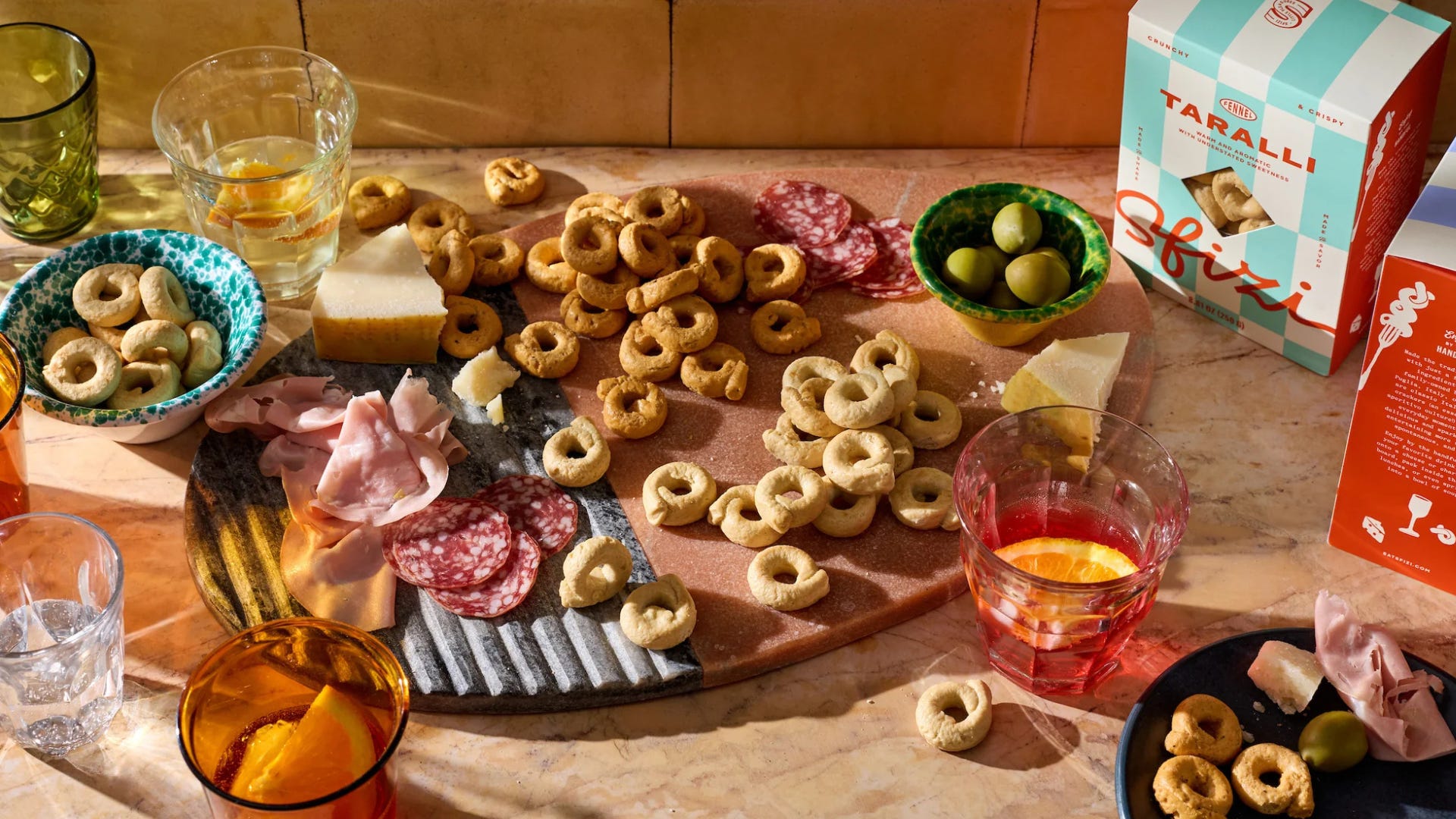
$60-65K: Personal investment to start the business
2 months: From the family-run factory in Puglia to the warehouse in New York
1 month: Time it took to sell out their first run
Your first product should not be your masterpiece. Don’t launch with your whole vision. Launch the thing that’s lightest to ship, easiest to approve, longest shelf life. This isn’t the end. It’s the beginning. Use it to learn logistics, wholesale, pricing, and customers before you scale into the harder stuff. Sfizi started with one SKU: a snack cracker.
Branding is your sales team at launch. Sheela and Joe spent over 50% of their initial investment on branding. Not product. The box. Customers bought it as an easy, giftable aperitivo snack. Wholesale buyers saw a beautiful box of Italian crackers and bought in bulk, without tasting a single one. The product has to be good. But the brand has to sell it first.
Your manufacturer is a strategic partner. Act like it. When you sell out and need to move fast, who do you call? Sheela and Joe messaged their Puglia producers during New Year’s in a mild panic. They responded immediately. Product was ready within a week. That’s a relationship built on transparency and shared vision. Your manufacturer is either your biggest asset or your biggest bottleneck. Mostly it depends on how you treat them.
You don’t need a network. You need a search bar. Sheela had zero industry contacts in Italy. So she typed “tarallificio” (Italian for taralli factory) into Google Maps, found every small family producer in Puglia, and started cold emailing. This isn’t an Italian story. Whatever you’re sourcing, wherever it’s made, the producers exist. Most people just don’t bother looking hard enough.
Wholesale can create demand, not just fulfill it. High MOQs leave new brands with more inventory than they know how to move. Platforms like Faire and Airgoods put you in front of hundreds of buyers at once, no sales rep required. Sfizi launched expecting to rely on DTC. Instead, wholesale orders came flooding in from shops they’d never heard of, in places they hadn’t targeted. Wholesale isn’t just a channel. It’s how people find you.
Market signal → The shorter the ingredient list, the stronger the signal. “More” used to mean better. Now it just means more. The brands winning are the ones that know what to leave out.
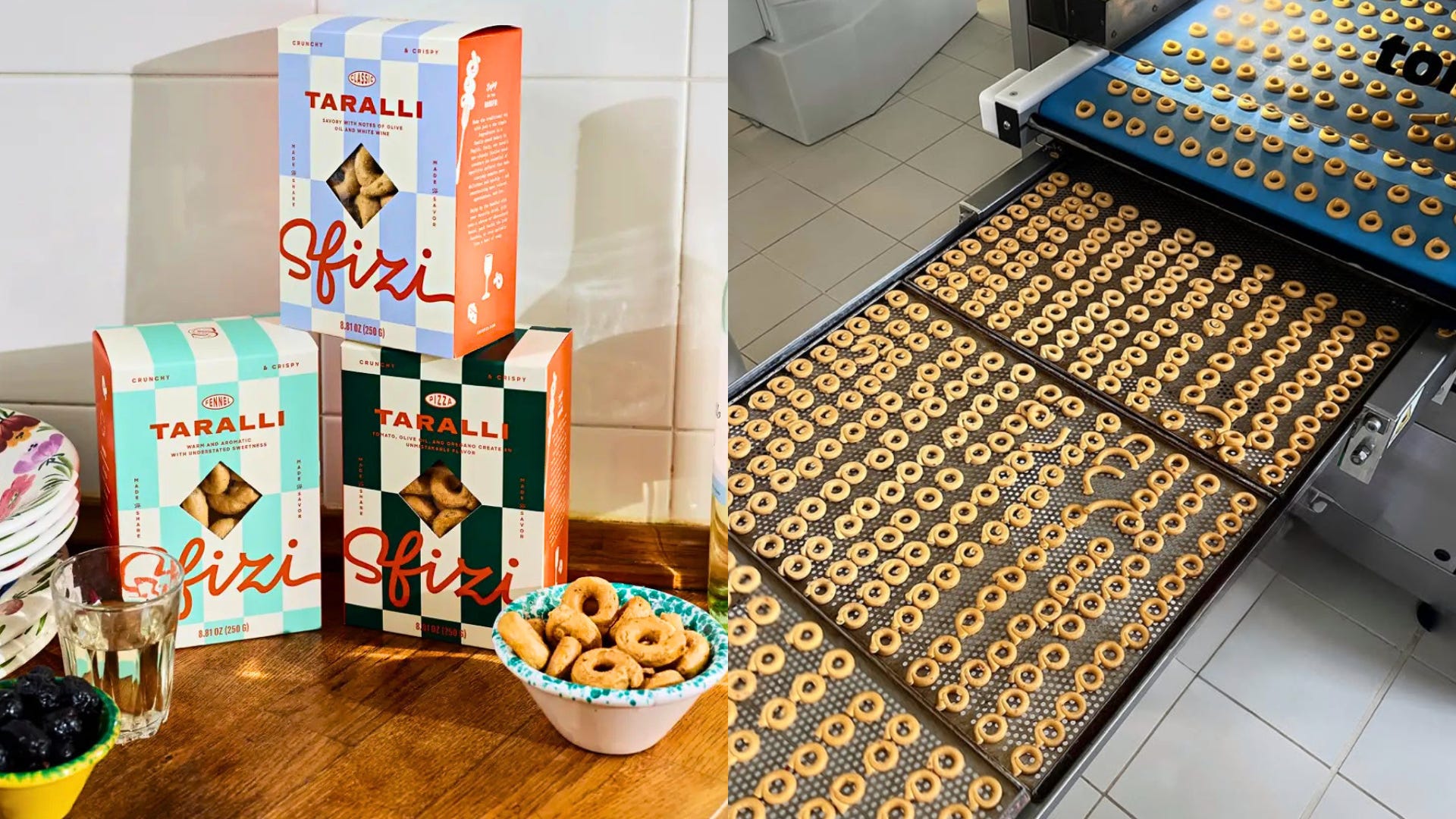
Your first SKU scorecard
Not every product should be your first product. Run the product through this scorecard if you want to get to market fast. Score each question 1–5.
1. Market: Is this familiar, but better? You don’t want zero awareness or total saturation. Aim for something people recognize, but haven’t had done properly.
2. Compliance: Can you sell it fast? Low friction. Easy to label. No special handling. If approval takes months, it’s too complex for product one.
3. Logistics: Can it move easily? Light, durable, shelf-stable. If it’s fragile, heavy, or highly perishable, it adds complexity you don’t need yet.
4. Production: Can you get to market quickly? Simple to produce. Manageable MOQ. Reliable supplier. If it takes too long, simplify it.
5. Distribution: Do you know where the first batch goes? Can you name ten shops that would stock this? If you don’t know where the first 1,000 units go, don’t produce them yet.
6. Packaging: Will it sell itself? Clear in seconds. Visually distinct. Easy to understand. If someone wouldn’t buy it without trying it, the packaging isn’t doing its job.
7. Economics: Can you survive being wrong? Your first run is a hypothesis. Leave room for mistakes.
SCORE: 30–35: Ship it. 22–29: Simplify it. Under 22: Save it for later.
A low score doesn’t mean the product is wrong. It’s just a little more challenging to start with. But if you believe in it, go for it!

This week we didn’t talk to one expert. We talked to 12, from every corner of CPG. We asked: If you joined a $1-5M CPG brand tomorrow, what’s the first thing you’d fix?
“Whatever actually needs fixing. And I won’t know that until I’ve taken a real look. Most fractional leaders come in ready to tear things down and rebuild. That’s not how I work. Before I make a single recommendation, I want to get the lay of the land. I want to understand what the team is doing because it’s working, versus what they’re doing because no one’s stopped to ask why. If something is working, I want to amplify it. If something isn’t working, or the team isn’t sure what role it plays in the foundation of the brand, that’s where I start. I’m not interested in activity for its own sake.” —Jenica Oliver, CMO
"Forecasting exactly how much cash they'll need." —Abby June Richards, CPA-TX
“The packaging. Every time. At $1–5M, the product is usually outperforming the brand. Wrong category register. Wrong buyer signal. Talking to the wrong person entirely. I’d run a fast diagnosis: retail audit, competitive set, honest look at what the packaging is saying vs what the brand needs to say. Most of what I find is fixable without a full rebrand. The right packaging fix doesn’t just clarify the brand, it opens doors to retail channels the current packaging is closing.” —Matthew Cave, Brand Identity & Packaging
“The first thing I’d ask is, do you actually own your product, taste, and cost? Two things I’d lock in immediately: Taste is king, but it’s a procurement problem as much as an R&D one. Is your recipe spec locked? What happens to flavor if you switch suppliers? Second is cost structure. Watch which commodities you’re exposed to. Wheat, oils, dairy, cocoa… these markets move, and they move a lot. If you’re not paying attention, your COGS will silently eat your margin.” —Michele Peroni, Agri-Food Procurement & Commodity Forecasting
"I'd fix structure. Most $1–5M brands lack a clear commercial strategy, so sales ends up selling to anyone who will buy, creating the wrong mix with the wrong partners. I'd prioritize margin and brand equity, then align distribution to build profitable, scalable growth." —Tiffany Wright, MBA, Chief Commercial Officer

Party on aisle 4: Is the hottest club in your neighborhood grocery, corner store, or coffee shop?
Job-hopping at the C-suite: Hershey’s U.S. President leaves after a year.
150M Americans feel dehydrated: But is PepsiCo’s Gatorade the brand to change that?
The next CPG brands will come from dorm rooms: Insomnia Cookies, Bawi, Goldilocks, Posana, Chara, Shooka Sauce, Tart, and more.
NYC’s 1st city-owned grocery has a location: And it’s on E 115th and Park.
The 2026 Dirty Dozen: Leafy greens top the list again (#1. Spinach, #2. Kale and collard greens), according to EWG Shopper’s Guide.
From single origin to lab-grown: Mondelēz and Celleste unveil world’s first cell-cultured chocolate bar.
When greens go gummy: Grüns’ DTC is about to overtake the OG daily greens brand, AG1.
🥚🥚
Hey founders! Does your product have eggs? There’s a cohort for that.
Hosted by the American Egg Board and JPG Resources, it’s the first-ever egg-centric founder cohort.
The sessions start this June and run for 6 months as a virtual, business-school-style program, covering everything from manufacturing and distribution to margins and legal. Small group sessions. Peer networking. Personalized 1:1 advising. AND it’s free.

April 23 (NY): Naturally New York Spring Fling
April 29 (Virtual): From Trade Spend to True Growth
May 20-21 (NY): The Lead Summit
May 31 (Virtual): Bon Appetit Pantry Awards Submission Deadline
June 3 (NY and Virtual): Clicks, Bricks & Everything In-Between
June 28-30 (NYC): Summer Fancy Food Show


