


Lydia Lee has been in influencer marketing long enough to remember when it was just called “talking to your customers.”
It was finding your super fans, giving them early access, and seeing what happened.
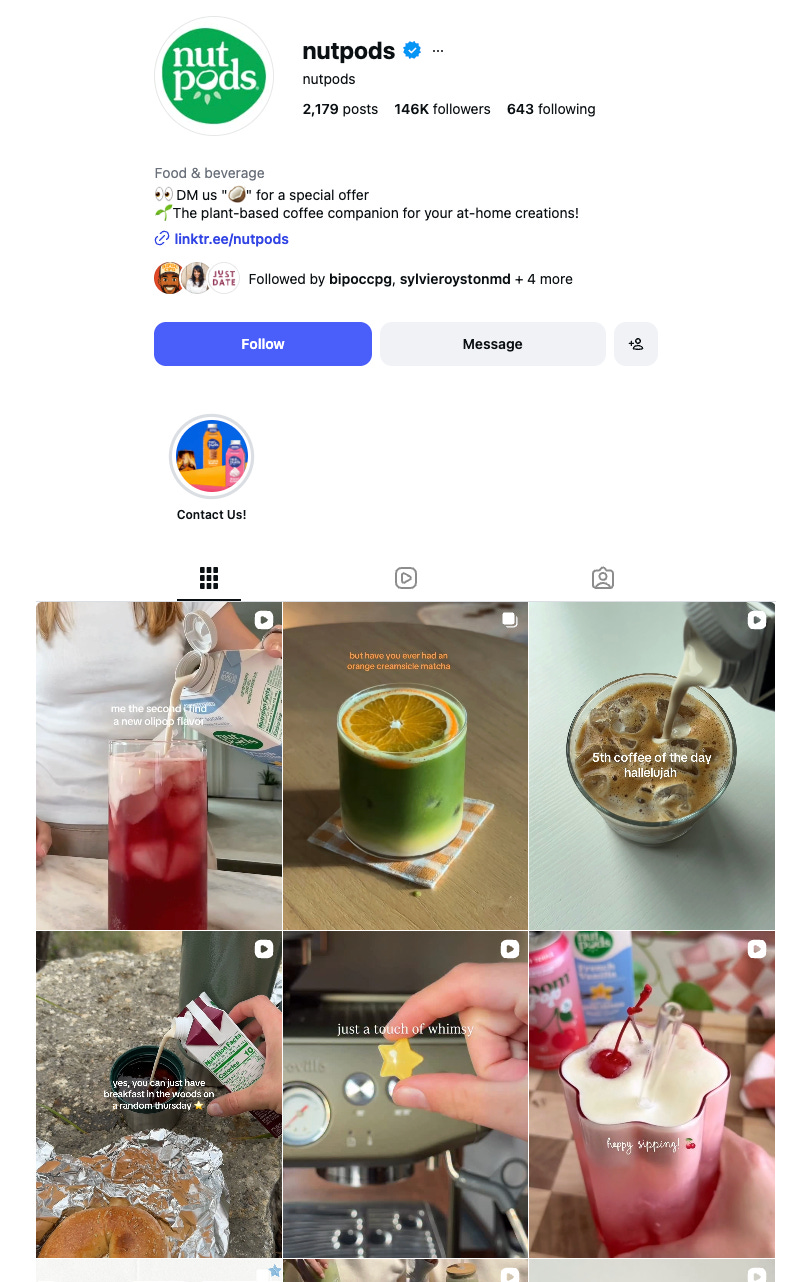
Her claim to fame was helping grow Nutpods, a dairy-free coffee creamer, from a Kickstarter campaign to acquisition. When they sold, she cashed out and started her own influencer marketing agency For the Clout.
She doesn’t care about follower counts. Or beautiful branded content that no one sees. What she cares about is the math, and getting product into enough hands that people start talking on their own.
00:15 - Before influencer marketing was a thing
05:09 - TikTok vs. Amazon
06:07 - Go nano and micro, almost always
09:17 - How to DM creators without being weird
11:32 - When your best creator stops converting (it happens)
12:37 - The Instacart-to-influencer strategy that drives sales
13:42 - When you can’t even give it away
16:18 - What a 41% engagement rate actually looks like
19:35 - We’re very much in your business
Text answers below have been edited for length and clarity. Full answers are in video. (We highly recommend watching!)
The first thing I always say is, start with math.
You can easily bankrupt yourself when it comes to influencer marketing. Build what I call a scaling model with two tiers of packages: your seeding product and your welcome package.
Your seeding product is something you can bleed through with samples. It’s a low-tier offer to try your product. If there’s a good fit, then move them up to your welcome package, the higher-tier offer.
For every thousand creators you cold DM, there’s about a 20% conversion rate of people actually responding. That’s 200 people. Multiply 200 times the cost of your seeding product. Can you afford to do that monthly, quarterly, or annually? Of those 200, about 40% will want to join your program. Multiply that by the cost of your welcome package. That’s the cost to acquire an influencer.
“TikTok is short-form Netflix, in my opinion. People go there to be entertained. We’ll do a TikTok Live for a brand, but then we see a spike in Amazon sales. I look at influencer marketing as a holistic channel.
I really like to invest in nano and micro creators.
If we’re paying a flat fee for content, I spend $200-$1,000, depending on the creator and the quality. Then you buy the ad rights and run it as an ad. It’s the best bang for your buck.
For the really big creators, the smart move is a revenue share model. Put their name on the packaging, pay them a percentage of everything sold as long as they promote it. That’s less risky than paying $150,000 for a 30-second YouTube clip.
With organic posts, you don’t control who sees it. My philosophy is to bleed through samples, create UGC, buy it for cheap, and run it as an ad because you can control who sees it. You can target your target demographic, your target location, within five to ten miles of stores you’re stocked in.
I always DM. If they don’t respond, then like their stuff, comment on a post, say “Hey, check your DMs.”
Outreach takes about a month to two before you start getting addresses back. Shipping takes a week, maybe a week and a half. They get their packages and maybe create content a couple weeks later. There’s no urgency because they’re not getting paid. So it’s usually a two-to-three-month ramp-up before really seeing any tagged content.
It takes about three months of building and six to nine months of consistently running it before you see sustainable results. Consistency is key. Gift 50 to 100 creators a month, give them prompts, let them play, and literally develop a relationship.
There’s a natural plateau with every creator.
You see a spike in sales, and then they drop off because everyone that follows that creator that loves your bagels will have already converted and become a customer. Unless they go viral and get new followers, they’ll naturally plateau and die off. You maintain that relationship, but you want to find new blood and not rely on that person so heavily.
I always recommend an affiliate program and an ambassador program. An affiliate is an extension of your sales team. An ambassador is an extension of your brand. The KPIs are different: affiliates make a percentage on sales, whereas ambassadors’ main goal is how many times they post and tag you.
I had a brand with a very superior product and we could not give their shit away for free. We were outreaching to 400 people a month and got three responses. Creators didn’t want to be associated with with brand. As hard as it is to listen to consumer feedback, you have to in order to succeed.
I have a very specific retail strategy.
You want to buy UGC content you’re being tagged in and run it as ads. For retail, I do sampling through Instacart. We find creators that live near one of the stores and ship them product through Instacart. It depletes your inventory, gets to them faster, and acts as an order. You see who actually posts, pay for the whitelisting or ad rights, and run it as an ad within a five-mile radius of select zip codes of stores you’re located in. They drive to the where-to-buy page, or you do an aisle offer they can redeem in store.
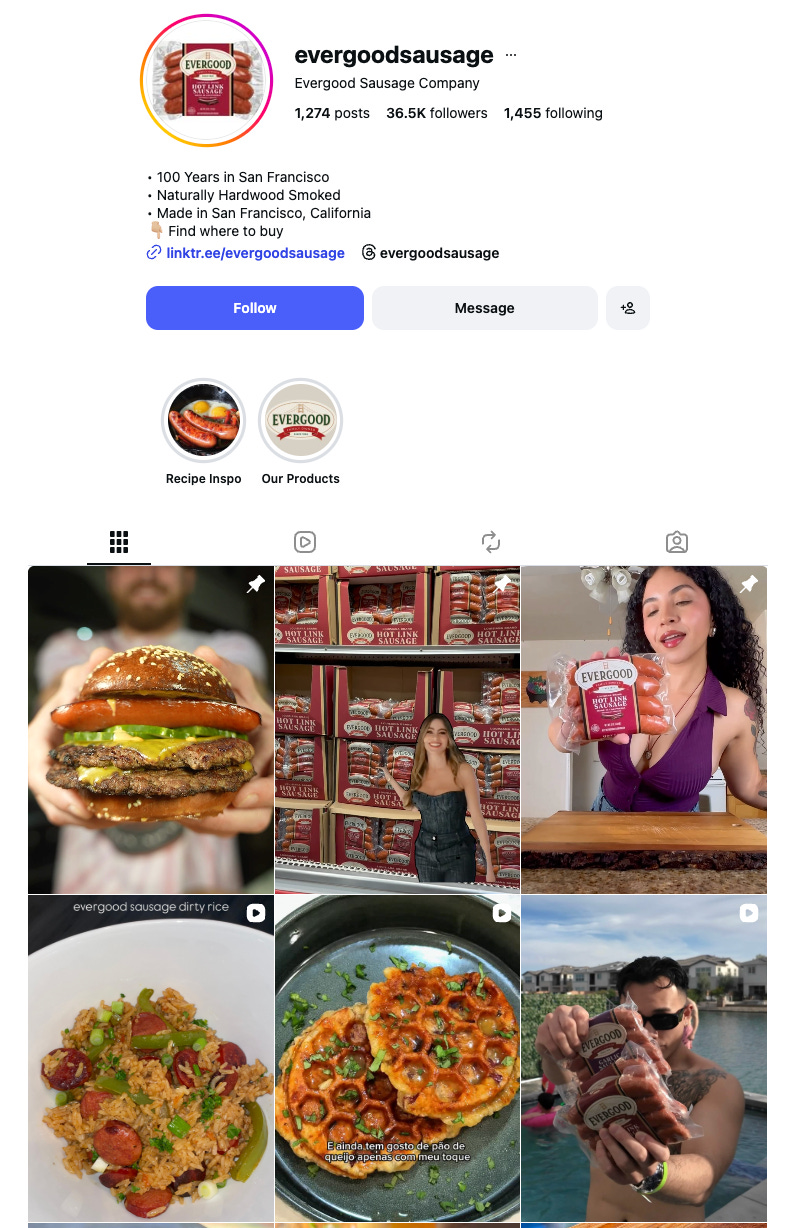
Evergood Sausage is a retail-first brand doing really well with our program.
They were at 19,000 followers when we started. Now they’re at 36,000. We’re at a 41% engagement rate. Industry average is 2-3%. We use influencer to offset media production costs: intensive sampling, driving trial, and identifying what we call series regulars to create content on behalf of the brand. We don’t create any of our own content. It’s all done through creators, real people consuming products.
Last year the sausage industry was down as a whole, but we maintained market share. The brand pays about $5,000 a month for paid collabs, but we get tagged in like 20 pieces of content a week. It’s crazy.
We’re very much in your business.
We meet with your sales team: What retailers are we launching in? What are our must-win accounts? When it comes to paid ads, we’re the ones fueling them. We look at the data: what content is converting, what isn’t, why are we running this as a retargeting ad. We help influence the strategy. We meet weekly. Sometimes it’s overkill, but I like to be involved.


